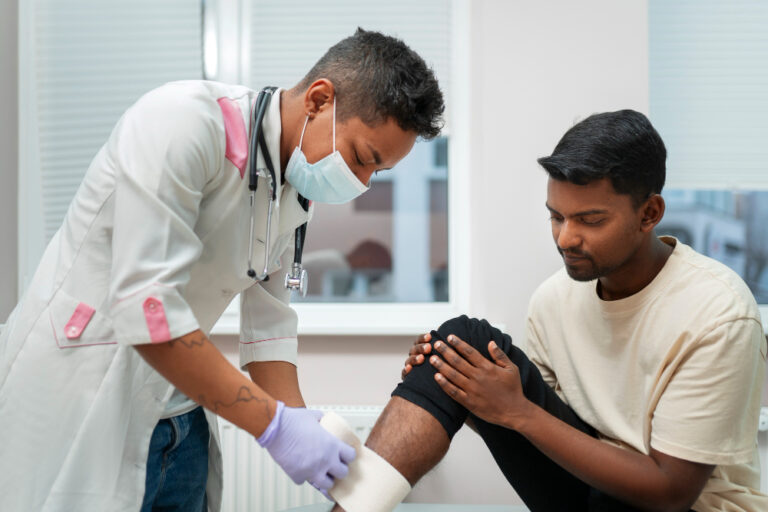
The Department of Orthopaedics manages conditions affecting bones, joints, muscles, and movement. Patients come to us with injuries, pain, deformities, and problems that interfere with walking, work, or daily activities. As the best college for orthopedics courses in Perambalur, we expose students to both acute injuries and long-standing musculoskeletal conditions that have progressed over time. Care in this department often involves careful assessment, imaging, treatment planning, and follow-up rather than single-visit management.
How orthopaedics supports clinical learning
Orthopaedics helps students understand conditions that are often visible and physically limiting, with pain, swelling, deformity, and restricted movement being common findings. Through our college for clinical orthopedics courses in Perambalur, students begin to see clearly how structure affects function and how injuries and degenerative conditions alter movement. The department also teaches how clinical decisions are made between conservative management and surgical intervention.
Clinical exposure and training
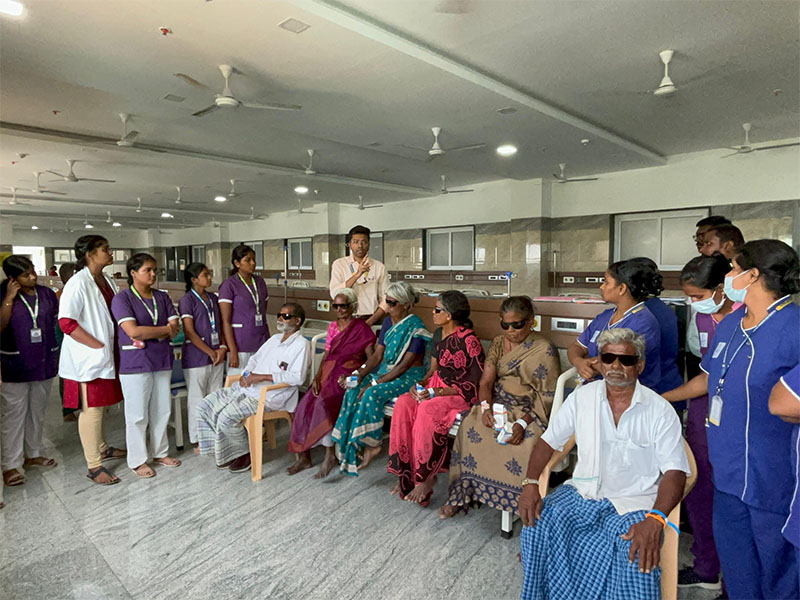
Clinical exposure in orthopaedics happens through both outpatient and inpatient care.
Students spend time in:
They observe how injuries are assessed, how X-rays and scans are reviewed, and how treatment plans are decided. Over time, students follow patients through admission, surgery when required, and recovery. All exposure takes place under supervision.
What we offer
Orthopaedic services at our hospital address a wide range of conditions affecting bones and joints. As part of our clinical orthopedics courses in Perambalur, the department provides exposure to:
Some patients are managed without surgery, while others require operative treatment. Follow-up and rehabilitation form part of routine care.
Ethical and professional practice
Orthopaedic care often involves pain, injury, and reduced mobility. Because of this, attention is given to explanation, consent, and patient comfort.
Students are guided on appropriate behaviour in clinics, wards, and theatres. Privacy and confidentiality are treated as part of everyday clinical work. Student involvement is supervised and limited to their level of training.
Clinical work in the department is handled by faculty involved in regular orthopaedic care. Students are guided during clinics, ward rounds, theatre sessions, and discussions.
Questions usually come up while patients are being seen and are addressed at that time. Much of the learning happens by watching examinations, reviewing images, and following how decisions are made over time.
Orthopaedics often requires step-by-step decision-making. Not all problems need surgery, and recovery can take time.
Students are encouraged to observe closely, understand imaging, and follow patients through treatment and follow-up. Learning is not rushed. Responsibility is added gradually as students become familiar with the workflow and patient care.
The Department of Orthopaedics at Dhanalakshmi Srinivasan Institute of Medical Sciences and Hospital manages both injury-related and long-term musculoskeletal conditions. Through our courses for orthopedics in Perambalur, time spent in the department helps students understand how movement, function, and recovery influence everyday clinical practice.
Elementum ex similique sollicitudin eveniet sem eveniet proin, iste euismod! Quia! Fugiat molestie leo placerat, tenetur.