
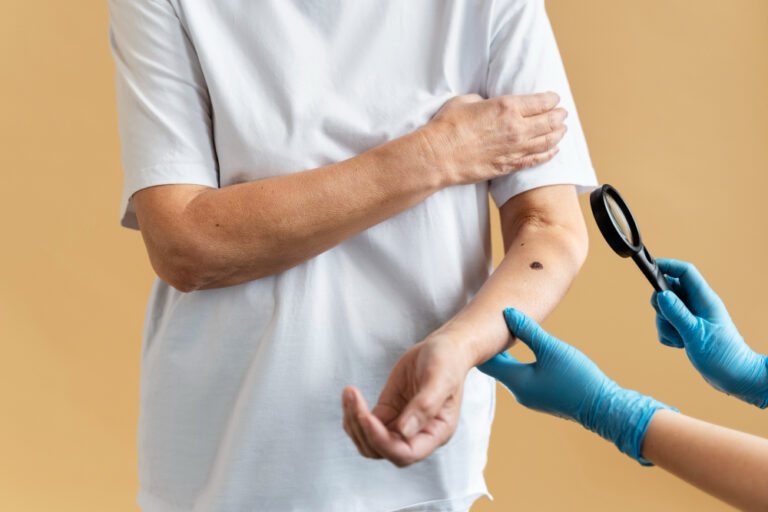
The Department of Dermatology, Venereology and Leprosy deals with conditions affecting the skin, hair, nails, and sexually transmitted infections. Patients come to us with problems that are often visible, long-standing, or uncomfortable, and sometimes difficult to ignore in daily life. Through our Dermatology, Venereology and Leprosy courses in Perambalur, students learn to manage both short-term conditions that settle with treatment and chronic conditions that require repeated visits, follow-up, and long-term care.
The department also handles conditions that carry social stigma, making clear communication, empathy, and sensitivity an essential part of everyday clinical practice.
How dermatology supports clinical learning
Dermatology helps students learn how to observe carefully. Many diagnoses depend on looking closely, noticing patterns, and relating what is seen on the skin to what is happening inside the body.
Students begin to understand how chronic conditions behave over time and how treatment plans are adjusted based on response. The subject also highlights the importance of explaining conditions clearly to patients, especially when treatment takes time.
Clinical exposure and training
Clinical exposure in dermatology is mainly outpatient based.
Students spend time in:
They observe how skin lesions are examined, how histories are taken, and how treatment plans are explained. Over time, students start recognising common conditions and understand how care is continued over multiple visits. All exposure happens under supervision.
What we offer
Dermatology services at the hospital cover a range of skin-related and sexually transmitted conditions.
This includes:
Some cases are managed within the department, while others involve coordination with other clinical services based on patient needs.
Ethical and professional practice
Work in dermatology often involves examining visible and sensitive areas. Because of this, attention is given to patient comfort, explanation, and privacy during consultations and procedures.
Students are guided on appropriate behaviour while interacting with patients. Confidentiality is treated as part of routine clinical practice, especially in cases related to sexually transmitted infections and leprosy. Student involvement is supervised and kept within clear limits.
Clinical work in the department is handled by faculty actively involved in regular outpatient and procedural care. We guide students during clinics, procedures, and routine case discussions. As a college for dermatology, venereology and leprosy courses in Perambalur, questions often arise while patients are being seen and are addressed in real time. Much of the learning happens through observing examinations, listening to explanations, and discussing cases, rather than through formal classroom sessions.
Dermatology often requires patience. Many conditions do not resolve quickly, and progress is seen over time rather than in a single visit.
Students are encouraged to observe closely, pay attention to detail, and follow patients across visits. Learning is not rushed. Responsibility is added slowly as students become familiar with the clinic flow and patient interaction.
At the Department of Dermatology, Venereology and Leprosy at Dhanalakshmi Srinivasan Institute of Medical Sciences and Hospital, we handle everyday skin conditions alongside cases that require long-term care. Time spent with us helps students understand the importance of careful observation, consistent follow-up, and clear communication in clinical practice, one of the reasons we are regarded as the best college for dermatology courses in Perambalur.
Elementum ex similique sollicitudin eveniet sem eveniet proin, iste euismod! Quia! Fugiat molestie leo placerat, tenetur.