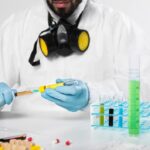
Best college for Para Clinic in perambalur
The paraclinical phase comes after the pre-clinical years and before full clinical postings. This is the stage where learning starts to shift.
Students move from understanding what is normal to recognising what changes with disease. The subjects in this phase deal with causes, patterns, and interpretation. Things are no longer always clear-cut. Findings need context, and answers often depend on more than one factor.
For many students, this phase feels demanding in a different way. The volume remains high, but the focus is less on memorising and more on thinking through information. This approach is what makes us the Best Medical College for Para Clinic Courses in Perambalur.
What para-clinical learning involves
Para-clinical subjects focus on understanding disease and its effects on the body. Learning here is not limited to definitions or descriptions.
Students begin working with:
- Changes seen in tissues and organs
- Microorganisms and their behaviour
- Drug actions and responses
- Laboratory reports and values
- Correlation between symptoms, signs, and investigations
Much of the learning involves comparison and interpretation. The same result may not mean the same thing in every situation, and students begin to get used to that. This depth of learning supports students enrolled in our Best collage for Para Clinic in Perambalur.
How para-clinical years prepare students
The para-clinical phase prepares students by changing how they approach information.
Laboratory values need to be read carefully. Microbiology findings depend on context. Drugs have effects as well as limitations. Students begin to weigh possibilities instead of looking for single answers.
The para-clinical phase prepares students by changing how they approach information.
When students enter clinical postings, this way of thinking becomes necessary. Reports, investigations, and treatment choices are easier to understand when students have already learnt how to question and interpret findings.
Teaching includes:
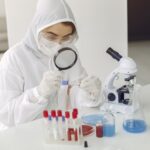
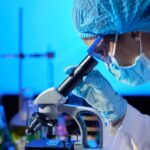
- Laboratory work and demonstrations
- Slide-based and specimen-based study
- Case discussions
- Review and interpretation of reports
Students are encouraged to discuss what they see and ask why findings appear the way they do. Concepts are often revisited from different angles before they start to make sense.
What we offer
Para-clinical teaching is supported through department-level laboratories and learning spaces used for routine academic work.
This includes:
- Practical laboratories for pathology, microbiology, and pharmacology
- Facilities for slide, specimen, and report-based learning
- Demonstration spaces for discussion and explanation
- Access to laboratory data and reports used for teaching
These facilities are used as part of regular academic sessions rather than as isolated activities.
Ethical and professional practice
Paraclinical teaching follows accepted academic and ethical practices. Students are informed about appropriate conduct during laboratory work, including how specimens and materials are handled during routine sessions.
Laboratory work is carried out under supervision and is limited to teaching and academic use. Attention is given to safety and responsible behaviour during regular classes. These expectations are reinforced during day-to-day work rather than treated as a separate topic.
Departments under para-clinical sciences
The para-clinical phase includes the following departments, each addressing a different aspect of disease, investigation, and interpretation: