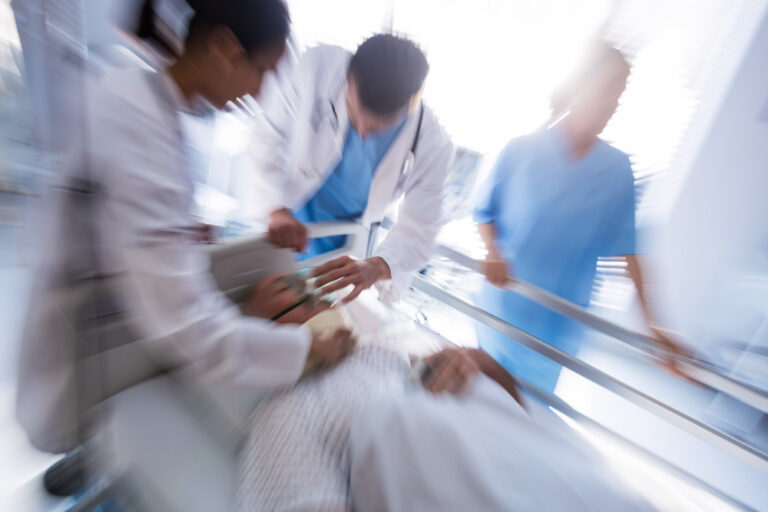
The Department of Emergency Medicine deals with patients who come to us without warning. These include accidents, sudden illnesses, medical emergencies, and situations where immediate attention is required. As the best college for emergency medicine courses in Perambalur, we expose students to patients arriving at different levels of severity, some needing rapid assessment and treatment, others requiring stabilisation before being shifted to intensive care. The work here is continuous, fast-paced, and often unpredictable, reflecting the realities of emergency care.
How emergency medicine supports clinical learning
Emergency medicine exposes students to clinical situations where time matters. Decisions are made quickly, often with limited information.
Students begin to see how symptoms are prioritised, how emergencies are identified, and how initial management is started. The department brings together learning from medicine, surgery, orthopaedics, anaesthesia, and radiology in real situations.
Clinical exposure and training
Clinical exposure in emergency medicine happens around active patient care.
Students spend time in:
They observe how patients are assessed on arrival, how urgent cases are handled first, and how stabilisation is carried out. Over time, students become familiar with emergency protocols and the flow of work. All exposure takes place under supervision.
What we offer
Emergency services at our hospital operate round the clock. Through our clinical emergency medicine courses in Perambalur, students are involved in a wide range of emergency care activities, including:
Patients are managed in the emergency department before being admitted, referred, or discharged based on their condition.
Ethical and professional practice
Emergency care often happens under pressure. Even so, attention is given to patient dignity, consent where possible, and respectful communication.
Students are guided on appropriate conduct in emergency settings. Privacy and confidentiality are maintained as much as possible. Student involvement is supervised and kept within defined limits.
Clinical work in the emergency department is handled by faculty actively involved in routine emergency care. We guide students during patient assessments, procedures, and case discussions as part of our emergency medicine courses in Perambalur.
Questions usually arise during patient care and are addressed in real time. Much of the learning happens by observing how emergencies are managed and how teams communicate under pressure.
Emergency medicine does not allow much time for hesitation. Situations change quickly, and priorities shift.
Students are encouraged to observe closely, stay calm, and understand how decisions are made under pressure. Learning happens through exposure and repetition. Responsibility is added gradually as students become familiar with the pace and environment.
The Department of Emergency Medicine at Dhanalakshmi Srinivasan Institute of Medical Sciences and Hospital handles urgent and life-threatening situations as part of everyday hospital work. Through our courses for emergency medicine in Perambalur, students learn how early clinical decisions, clear communication, and effective teamwork shape patient outcomes during critical moments.
Elementum ex similique sollicitudin eveniet sem eveniet proin, iste euismod! Quia! Fugiat molestie leo placerat, tenetur.