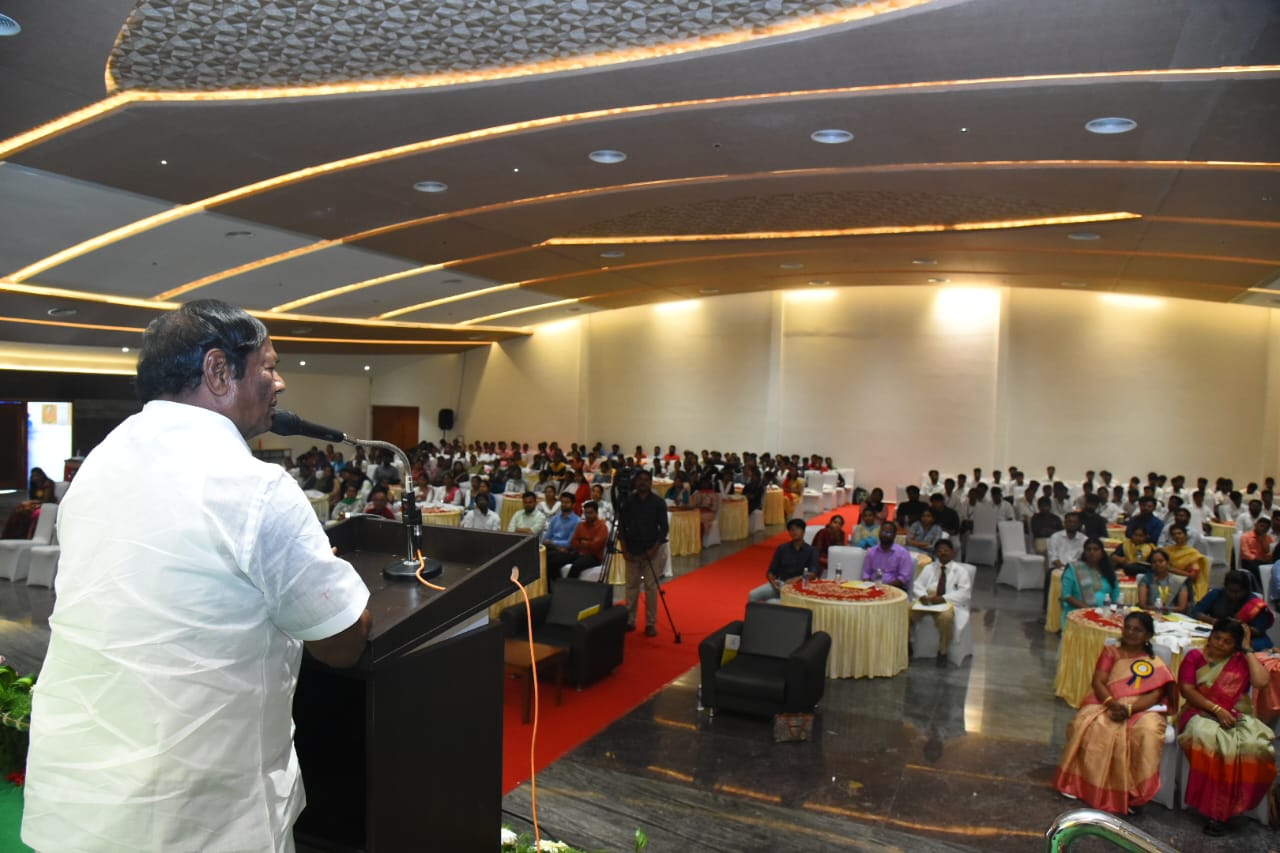

The Department of Psychiatry manages mental health conditions encountered in both acute and long-term settings. Patients come to us with psychiatric emergencies as well as ongoing conditions that require regular care and follow-up. As the best college for psychiatry courses in Perambalur, we expose students to care delivered through both outpatient and inpatient services. Some patients need short-term intervention, while others are supported over longer periods, allowing students to understand the medical and psychosocial dimensions of mental health care.
How psychiatry supports clinical learning
Psychiatry exposes students to a different side of clinical work. Symptoms are not always visible, and diagnosis often depends on listening, observation, and conversation rather than tests alone.
Students begin to understand how mental health conditions affect behaviour, relationships, and daily functioning. The subject also helps students recognise how physical illness and mental health are often connected.
Clinical exposure and training
Clinical exposure in psychiatry is based on patient interaction and discussion.
Students spend time in:
They observe how histories are taken, how mental status examinations are carried out, and how treatment plans are discussed with patients and families. Over time, students become familiar with common psychiatric conditions and the way care is planned and adjusted.
All exposure takes place under supervision.
What we offer
Psychiatry services at our hospital provide care for both emergency and long-term mental health needs. As a college for psychiatry courses in Perambalur, the department offers exposure to:
The department is supported by medical staff as well as psychiatry social workers, who assist with counselling, follow-up, and psychosocial support as part of routine care.
Ethical and professional practice
Psychiatric care involves sensitive information and close patient interaction. Because of this, strong emphasis is placed on confidentiality, informed consent, and respectful communication. As part of our courses for psychiatry in Perambalur, students are guided on appropriate professional behaviour during interviews and clinical discussions. Patient privacy is treated as a routine aspect of everyday work, and student involvement is always supervised and kept within clearly defined limits.
Clinical work in the department is handled by faculty involved in routine psychiatry services. Students are guided during clinics, ward rounds, and case discussions.
Questions often come up during patient interviews or discussions and are addressed at that time. Much of the learning happens through listening, observation, and talking through cases rather than formal sessions.
Psychiatry does not always give quick answers. Progress can be slow, and responses to treatment vary.
Students are encouraged to spend time with patients, listen carefully, and avoid jumping to conclusions. The focus is on understanding the person, not just the diagnosis. Responsibility is added gradually as students become comfortable with the setting and nature of the work.
The Department of Psychiatry at Dhanalakshmi Srinivasan Institute of Medical Sciences and Hospital provides both emergency and long-term mental health care. As a college for clinical psychiatry courses in Perambalur, time spent in the department helps students understand how mental health fits into overall medical practice and why careful listening and consistent follow-up are essential in patient care.
Elementum ex similique sollicitudin eveniet sem eveniet proin, iste euismod! Quia! Fugiat molestie leo placerat, tenetur.